



A recall notice in the mail tends to trigger a small jolt of dread, but for most CDJR owners it's a routine part of vehicle ownership. Manufacturers and NHTSA issue safety recalls to catch problems before they become dangerous, and running a CDJR recall check takes just a few minutes. If you drive a Chrysler, Dodge, Jeep, or Ram and want to confirm your vehicle is clear, schedule an appointment with our team in Warrenton, OR once you know where things stand.
This guide covers why recall checks matter, how to find your VIN, and every method available for checking your recall status along the Oregon Coast.
Why Every CDJR Owner Should Check for Open Recalls
Recalls happen when manufacturers, or NHTSA, determine that a vehicle or piece of equipment creates an unreasonable safety risk or fails to meet minimum federal safety standards. Most get issued voluntarily by the automaker, and the fix is a repair, replacement, or refund, though refunds happen rarely.
Safety isn't the only reason to stay on top of this. An unresolved recall can drag down a vehicle's resale value, since a car with an open safety issue on record is a harder sell. NHTSA recommends checking your VIN twice a year, since new campaigns can be issued at any time, and your VIN might get added to an existing one months after the initial announcement.
How to Find Your 17-Character VIN
Every recall search starts with your 17-character Vehicle Identification Number. Each character in that sequence carries meaning, encoding details like the manufacturer, model, and production year. You'll typically find it in one of these spots:
On the VIN plate at the base of the driver's-side dashboard, visible through the windshield from outside the vehicle.
On a label inside the driver-side doorframe, usually visible when the door is open.
Printed on your registration, title, or insurance card.
Double-check every character when you copy it down. The letter O and the number 0 look nearly identical, as do the letter I and the number 1, and one mistyped character will send you the wrong results.
How to Check Your Dodge, Jeep, Ram, or Chrysler Recall Status
Once you've got your VIN in hand, you have three reliable ways to run a check. Each pulls from slightly different data, so it's worth knowing what each tool offers.
Using Lum's CDJR Recall Lookup Page
Our own Lum's CDJR recall check page lets you run a Mopar recall search directly for your Chrysler, Dodge, Jeep, or Ram. Enter your VIN, and you'll see whether your vehicle has any open campaigns. If something shows up and you have questions, our service experts can talk through next steps right away, often the fastest route if you're already planning to book service in Warrenton, OR.
Using the Official Mopar Recall Search
Mopar's official recall search lets you enter your VIN or sign in to a Mopar account to check status. It also handles reimbursement if you already paid out of pocket for a repair that later became part of a recall campaign. This Mopar recall search sometimes displays Customer Satisfaction Notifications (CSN) or special service messages alongside true safety recalls, so read each entry carefully rather than assuming they're all the same thing.
If you don't have access to the vehicle itself, CheckToProtect.org offers a license-plate lookup option, and anyone who received a Stop-Drive advisory can call 833-585-0144 for guidance.
Using the NHTSA Recall Lookup Tool
An NHTSA recall lookup lets you search by VIN or by make and model, and it covers more than just vehicles, including car seats, tires, and other equipment. A clean result will state "0 unrepaired recalls associated with this VIN." That said, the tool has a few blind spots worth knowing about. It may not reflect recalls that have already been repaired, campaigns announced so recently that not all VINs have been identified yet, recalls older than 15 years, or issues from smaller or ultra-luxury manufacturers. NHTSA recommends checking twice yearly, following any interim safety guidance the manufacturer issues, and then contacting your local dealer for the free repair.
Recall vs. Service Campaign vs. Warranty Repair vs. Routine Maintenance
Not every notice about your vehicle counts as a safety recall, and the distinctions matter. A safety recall covers a defect related to safe vehicle operation or occupant protection, full stop. A service campaign, sometimes called a Customer Satisfaction Notification (CSN), addresses a non-safety issue, often something preventive the manufacturer wants fixed before it grows into a bigger problem, even though it poses no safety risk on its own.
A warranty extension works differently again. It covers a specific part beyond its original warranty term, and the manufacturer replaces that part for free up to a set time or mileage limit, even if you're not the original owner. Routine maintenance is a separate category entirely, covering normal wear and tear like oil changes and brake pad replacement. That's always the owner's cost, and it has nothing to do with free recall repairs. Knowing which category applies helps you know what to expect before you ever pick up the phone.
What to Do If Your Vehicle Has an Open Recall
Finding an open recall on your Chrysler, Dodge, Jeep, or Ram means it's time to contact a dealer, not worry. NHTSA urges owners to reach out to their local dealership right away once a recall is confirmed. You can book your recall repair with us as soon as you know your vehicle is affected, and our team in Warrenton, OR will walk you through what comes next for drivers throughout Clatsop County and Southwest Washington.
Following Urgent Safety Notices Like "Do Not Drive" or "Park Outside"
Some recalls come with urgent language, and that language needs to be followed exactly as written. Stellantis, for example, advised owners of select 2017-2018 Chrysler Pacifica plug-in hybrids to park outdoors and away from other vehicles or structures due to fire risk, even while the vehicle was off, and not to charge it until a remedy was identified.
In a large Jeep recall, Stellantis similarly told owners to park outside and away from structures because of an electric hydraulic power steering pump wiring issue that could overheat nearby combustible materials. Some notices affect driveability and others don't, so read each one carefully instead of assuming.
Contacting an Authorized Dealership About Parts and Scheduling
All FCA US LLC dealers have access to parts for vehicles under an active safety campaign, though timelines vary depending on the specific fix. The manufacturer determines the remedy itself, whether that lands as a repair, a replacement part, or in rare cases a refund, and sometimes a permanent fix isn't finalized yet or parts are on backorder. Reaching out to an authorized dealer gets you accurate, current information about your specific vehicle and campaign instead of guesswork.
What to Expect When Scheduling Recall Service at Lum's CDJR
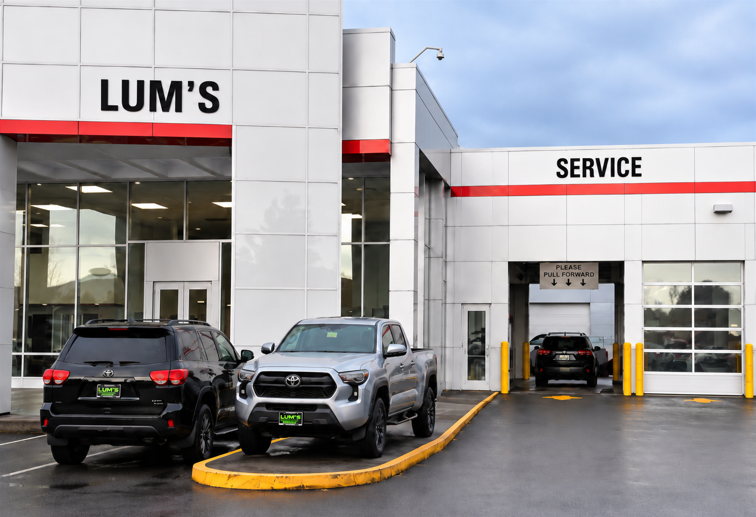
Lum's Chrysler Dodge Jeep Ram has been family-owned since 1969, when Mr. Lum founded the business in Astoria, OR. We've grown to represent four major brands while staying rooted in the same community values that started it all, and today we serve drivers across Warrenton, Astoria, Seaside, Long Beach, and the wider Oregon Coast and Southwest Washington region.
When you schedule recall service with us, our team confirms your VIN, checks parts availability for your specific campaign, and gives you a realistic timeline based on what Stellantis has released for that repair.
We also handle routine maintenance, diagnostics, brake service, battery testing, and tire care, so if you're already due for an oil change or inspection, it's easy to combine visits. You can reach our service department directly at (503) 861-1144, or stop by 1605 SE Ensign Lane, Warrenton, OR 97146. Our service department is open Monday through Friday from 8:00 AM to 5:00 PM and Saturdays from 8:00 AM to 4:00 PM, though hours can shift around holidays, so it's worth confirming before you drive out.
CDJR Recall Check FAQs
How Often Should I Check My VIN for Recalls?
NHTSA recommends checking your VIN twice a year, since a recall can be issued at any point and VINs get added to existing campaigns on a rolling basis. Making it a twice-yearly habit, maybe alongside seasonal maintenance, keeps you from missing something new.
Are Recall Repairs Really Free?
Yes. Federal law requires manufacturers to provide free safety recall repairs on vehicles up to 15 years old, counted from the first sale date rather than the model year. For vehicles older than that window, automakers will often still fix the issue voluntarily at no charge, so it's worth asking regardless of your vehicle's age. Dealers must perform these repairs at no cost no matter where you originally bought the vehicle, and owners are never on the hook for the bill.
What if I Bought My Vehicle Used?
Recalls follow the vehicle, not the original buyer, so a used-car owner has the same right to a free repair within the eligibility window. Recall history can sometimes be incomplete at the time of purchase, which is why it's smart to check status yourself both before and after buying, and to ask the selling dealer to resolve any open recalls before delivery. Running a quick check on a pre-owned vehicle's recall status before you sign anything is one of the simplest ways to buy with confidence.
Check Your VIN and Schedule Service With Lum's CDJR
A recall is the system working the way it's supposed to: catching a problem and getting it fixed at no cost to you. The process only takes a few minutes and could save you a real headache down the road.
If your recall check turns up an open campaign, or if you just want peace of mind, our team in Warrenton, OR is ready to help drivers throughout Clatsop County and the Oregon Coast. Schedule an appointment with Lum's Chrysler Dodge Jeep Ram today, and we'll get your vehicle squared away.