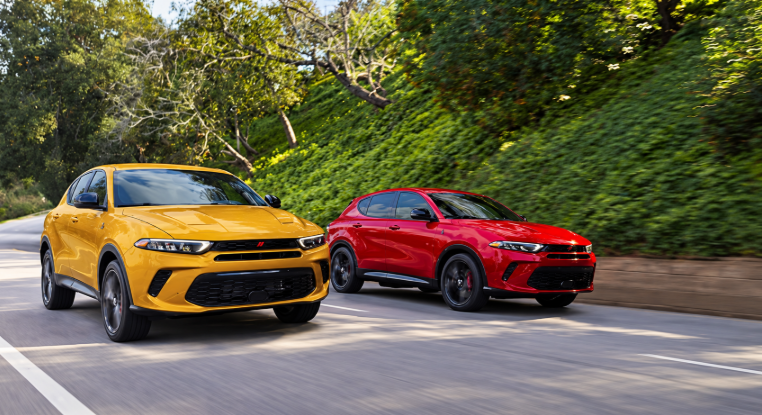





Customers at Lum's Chrysler Dodge Jeep Ram in Warrenton, OR ask about Dodge Hornet performance a lot, and for good reason. This compact SUV built its reputation on turbocharged power and sharp handling, plus a plug-in hybrid option that outguns its gas-only sibling. Production wrapped after the 2025 model year, so every spec covered here reflects that final Dodge Hornet lineup. Introduction to the Dodge Hornet Lineup The Dodge Hornet arrived as a compact SUV with two distinct personalities. The Hornet GT sticks with a gas-only turbocharged engine for drivers who want straightforward power. The Hornet R/T brings a plug-in hybrid setup that delivers more horsepower and quicker acceleration than the GT. Dodge built both trims around standard AWD, Sport Mode, and Koni shocks, so whichever one you're looking at, you're getting a vehicle engineered with real performance intent. If you want to see what's currently available, you can browse our live Dodge inventory to check what's on the lot right now. Here's how the two trims stack up on paper: Spec Hornet GT Hornet R/T Engine/Powertrain 2.0L turbocharged Hurricane4 (gas only) 1.3L turbocharged engine + 90-kW electric motor, 15.5-kWh battery (PHEV) Drivetrain Standard AWD (mechanical) eAWD (engine drives front axle, motor drives rear) Transmission Nine-speed automatic Six-speed automatic with paddle shifters Horsepower/Torque 268 hp / 295 lb-ft 288 hp / 383 lb-ft combined 0-60 Time 6.5 sec (manufacturer-estimated, Sport Mode) 5.6 sec with PowerShot (manufacturer-estimated) Fuel Economy/Electric Range Gas only, no electric range 32 miles EPA-estimated all-electric range; ~360 miles total range Dodge Hornet GT: Gas-Powered Performance The Hornet GT suits drivers who want responsive power without the added complexity of a hybrid system. Dodge Hornet GT performance centers on a turbocharged four-cylinder engine paired with a nine-speed automatic transmission, and it's the trim most people picture when they think of a Dodge Hornet. Engine Specifications and Horsepower Dodge equips the GT with a 2.0-liter turbocharged Hurricane4 engine producing 268 hp and 295 lb-ft of torque. That torque figure matters more than people realize; it's what lets the Hornet GT merge onto Highway 101 or pull away from a stoplight without hesitation. The Dodge Hornet GT engine uses a twin-scroll turbo with an electronically actuated wastegate and a water-to-air intercooler, a combination that cuts down on lag and keeps power delivery consistent even when the turbo is working hard on a steep coastal grade. Acceleration and Driving Dynamics With Sport Mode engaged, the Hornet GT is estimated to hit 0-60 mph in 6.5 seconds, with a top speed of 140 mph. Sport Mode, activated with a steering-wheel button, sharpens throttle response and shift timing while unlocking full power and torque. If the GT is fitted with Dual Stage Valve shocks, Sport Mode also firms up the suspension. Dodge rates the GT's max lateral grip at 0.87g, which translates to real confidence when you're taking a curve along the coast a little quicker than usual. Dodge Hornet R/T: Plug-In Hybrid Performance The 2025 Dodge Hornet plug-in hybrid leads the entire lineup in output, and that surprises a lot of shoppers who assume hybrid automatically means slower. Engine and Electric Motor Combination The Dodge Hornet R/T engine is a 1.3-liter turbocharged unit from the Global Small Engine family, using third-generation MultiAir technology, and it's paired with a 90-kW electric motor and a 15.5-kWh lithium-ion battery. The gas engine drives the front axle while the electric motor powers the rear, an eAWD arrangement rather than a traditional mechanical AWD setup. That electric motor delivers its torque from zero rpm, which is a big part of why the R/T feels so immediate off the line. Horsepower, Torque, and Acceleration Features Combined, the R/T's engine and electric motor produce 288 hp and 383 lb-ft of torque, the highest output in the lineup. That torque figure is worth pausing on: 383 lb-ft is what makes merging onto the highway or climbing a coastal hill feel effortless rather than strained. Paired with a six-speed automatic and paddle shifters, the R/T runs an estimated 0-60 mph in 5.6 seconds with PowerShot engaged, making it the quickest Hornet built. Dodge also gave the R/T a class-exclusive feature called PowerShot. Pull both paddle shifters at once and perform a pedal kickdown, and the R/T delivers a 30-hp burst for 15 seconds, cutting 1.5 seconds off the R/T's normal 0-60 time to reach that 5.6-second figure. It resets after a 15-second cool-down, so you can use it again once traffic clears or you're merging onto the next stretch of highway. It makes the 2025 Dodge Hornet R/T feel genuinely quick, not just quick on paper. On the efficiency side, the R/T's EPA-estimated all-electric range sits at 32 miles, and the R/T is rated at 77 MPGe. Combined with the gas engine, total range reaches around 360 miles. A full charge takes about 2.5 hours on a Level 2 240V connection, available through Mopar®, thanks to the R/T's 7.4-kW onboard charging module. For a lot of local commutes around Warrenton, OR, that 32-mile electric range alone could cover the entire round trip without touching the gas engine. Drivetrain, Drive Modes, and Handling All-Wheel Drive Capability Every Dodge Hornet, GT or R/T, comes standard with AWD featuring dynamic torque vectoring, which shifts power between wheels as needed for grip. The GT relies on a conventional mechanical AWD system, while the R/T's eAWD setup leans on that electric rear motor for added traction. On wet or foggy Oregon Coast roads, that difference matters less than the fact that both systems are built to keep the Hornet stable when conditions turn slick. Selectable Drive Modes for Varied Conditions Sport Mode comes standard across the lineup. It sharpens throttle response, tightens up the steering feel, and brings in an electronic slip differential for extra grip through corners. The R/T adds three additional modes: Hybrid, which balances the gas engine and electric motor by default; E-Save, which reserves or actively charges the battery for later use; and Electric, which delivers 32 miles of zero-emissions driving and switches to hybrid automatically when the battery runs down or you ask for more power. That flexibility lets a driver save the battery for a coastal errand run or lean on Hybrid mode for a longer highway trip. If you have questions about financing a Hornet GT or R/T, our team at Lum's CDJR can walk you through the options. Suspension, Braking, and Available Performance Technology Both trims come standard with Koni frequency selective damping shocks, a class-exclusive feature that adjusts damping based on road input rather than a fixed setting. That matters on the Oregon Coast, where rough pavement, hilly terrain, and quick weather changes are part of daily driving. Brembo four-piston front fixed calipers are standard on the R/T and available on the GT, and Brembo-equipped Hornets stop from 62 mph to 0 in 138 feet. The R/T also gets a standard brake-by-wire Intelligent Braking System, which blends regenerative braking with the physical brakes to recover energy while improving deceleration control when coasting. For drivers who want more, the available Track Pack adds a Marelli dual-stage-valve suspension, 20-inch Abyss finish wheels, red Brembo calipers, aluminum interior accents and pedals, and Alcantara sport seats. A lot of Dodge Hornet performance parts conversations start here, since the Track Pack is the clearest way to sharpen both handling and stopping power on either trim. Independent front and rear suspension on both the GT and R/T also helps smooth out wet or slick pavement, which is a fairly regular occurrence near Warrenton, OR. Matching the Hornet to Your Driving Needs Commuting and Highway Driving For daily driving, the GT's 295 lb-ft of torque makes merging and passing straightforward, while the nine-speed automatic keeps the engine in its comfort zone at highway speeds. The R/T takes it further for commuters with a short daily distance, since its 32-mile electric range can realistically cover a round trip to work without burning gas. Navigating Oregon Coast Weather Rain, fog, and the occasional patch of winter ice come with the territory near Warrenton, OR, and the Hornet's standard AWD along with its independent suspension are built with exactly that in mind. The R/T has an added edge here: its electric motor sends instant torque to the rear axle, which helps with traction the moment a wheel starts to slip on a wet or icy road. Combined with the Koni shocks, both trims are engineered to keep composure through the kind of weather swings the coast is known for. For Drivers Who Prioritize Performance If outright speed is the priority, the R/T's 5.6-second 0-60 time and PowerShot burst make it the clear choice, holding both the highest horsepower and quickest acceleration in the Hornet lineup. Drivers who prefer a simpler, gas-only setup with strong horsepower and the option to add the Track Pack will find the GT well suited to spirited weekend drives. Weighing the Dodge Hornet pros and cons usually comes down to whether you want hybrid range and extra power or the straightforward feel of a turbocharged gas engine. Check Current Dodge Hornet Availability at Lum's CDJR Browse Current Inventory Since production has ended, stock changes regularly, so checking directly with us is the best way to know what's on our lot. We'd encourage you to browse our inventory to see current stock, or explore new and available Dodge vehicles through our online search tool. Talk to Our Team Our team at Lum's Chrysler Dodge Jeep Ram in Warrenton, OR is glad to answer questions about GT versus R/T performance, walk you through financing options, or set up a test drive so you can feel the difference between these two trims yourself. Reach out today and let us help you find the right fit.