




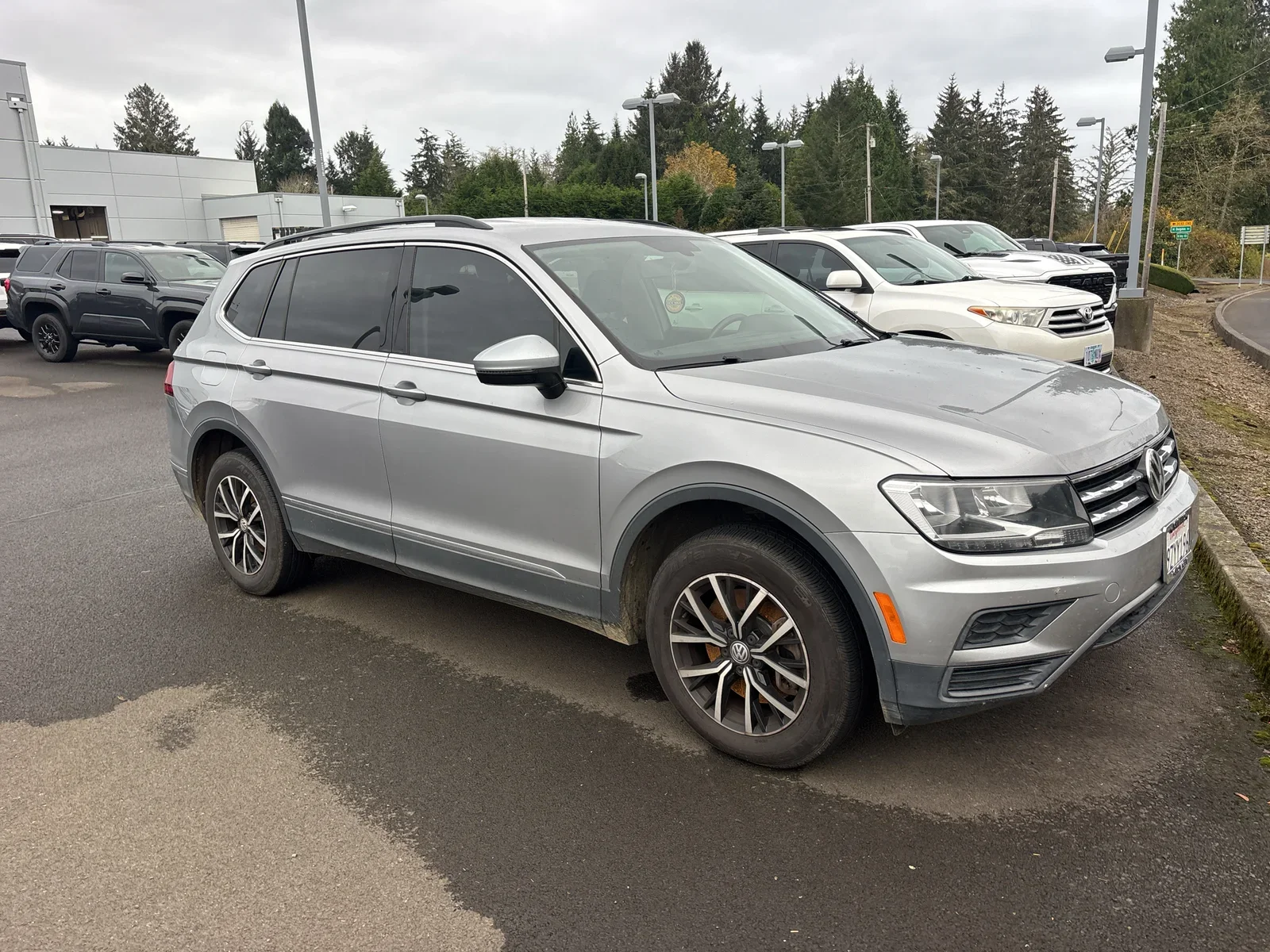
Shopping for used SUVs near Astoria, OR means thinking about more than trim levels and color. Our roads are wet for much of the year, the hills are real, and coastal wind and moist air take a toll on vehicles. At Lum's Chrysler Dodge Jeep Ram, we've helped north Oregon Coast drivers sort through this for decades. When you're ready to compare, you can browse our current pre-owned selection alongside this guide.
What Used SUVs Near Astoria, OR Need to Handle on the Oregon Coast
Local driving asks a lot of a vehicle. Before you weigh drivetrains or seat counts, get clear on how you actually drive from Warrenton to Astoria, down to Seaside, or over to Portland.
Rain, Hills and Wind: How Local Conditions Shape Your Choice
Rain makes pavement slick, and a vehicle needs two to three times more stopping distance on wet roads. Visibility drops too. Roads are especially slick in the first hours of fresh rain, when oil mixes with water. Hydroplaning can occur at speeds as low as 35 mph, especially with worn tires.
So the best used SUV for our area has good tires, strong brakes and clear sightlines. Hills and crosswinds vary by route, and the test-drive checklist later in this guide shows how to judge both on the roads you actually drive.
Family Trips, Holiday Travel and Gear Hauling
Holiday and ferry traffic, beach and fishing gear, and runs to Cannon Beach, Long Beach, or Ilwaco all shape what you need, as do trips into Southwest Washington. Think about how many people ride along most weeks and what you load on weekends. Children under 13 should ride correctly buckled in the back seat, in seats suited to their age and size, so check that the rear seat works for your family. Before any trip, check TripCheck for Oregon road conditions.
AWD, 4WD or Front-Wheel Drive: Which Used SUV Fits Your Driving?
Drivetrain labels on a listing can mislead, so pick the system that suits your routes and understand what it can and can't do.
What Each Drivetrain Does Well (and What It Can't Do)
AWD directs power to whichever wheels have available traction. 4WD splits power across all four wheels equally, though some 4WD systems need the driver to turn them on. Check the specific SUV's controls and owner's manual. FWD is common on many SUVs, so verify the system on each listing.
There's a tradeoff. Bridgestone says AWD does little for turning and braking on snow and ice compared with a two-wheel-drive vehicle on all-season tires. In rain, speed, visibility, stopping distance and tire traction decide what happens. Neither AWD nor 4WD makes wet or hazardous roads safe. A used AWD SUV in Astoria can help you get moving. It won't help you stop.
Why Tires and Tread Condition Matter as Much as Drivetrain
Tread gives wet-road traction, and 2/32 inch is the legal minimum. But AAA testing on wet pavement at highway speeds found tires worn to just 4/32 inch stopped 87 feet longer for a passenger car and 86 feet longer for a light truck than new all-season tires, with handling down 33% and 28%. At 60 mph, the worn-tire vehicle was still going 40 mph where the new-tire vehicle had stopped, which is why AAA recommends replacing tires at 4/32 inch. On a used SUV, factor new tires into the price if the tread is near that mark.
Also check the tire details:
Some manufacturers recommend replacing tires 6 to 10 years old regardless of wear.
Traction grades run AA, A, B, and C.
Look for cuts, bulges, cracks, and uneven wear.
Cupped or uneven wear can signal steering, suspension, or brake problems.
Models from 2008 on have TPMS. A lit TPMS symbol means at least one tire is significantly underinflated, and TPMS does not replace regular pressure checks. Check pressure cold, meaning the vehicle hasn't been driven for at least three hours, and compare it to the door-placard figure rather than the tire's maximum.
Matching Cargo Space, Seating and Ground Clearance to Your Life
Specs on paper rarely tell the whole story. The right size is the one that fits your people, your gear, and your driveway.
Compact, Midsize and Three-Row Used Family SUVs
Whether you want a used family SUV in Warrenton or a pre-owned SUV for the Oregon Coast, start with the size class. Jeep, Dodge, Chrysler, Ram and other brands offer different layouts, and what's available depends on current inventory.
| Class | Best For | Seating Layout to Confirm | Cargo and Liftgate Checks | Drivetrain to Verify on the Listing |
|---|---|---|---|---|
| Compact | Couples with light gear, or anyone commuting on Highway 101 | Rear seat room for your regular passengers | Load your usual bags and check liftgate reach | AWD, 4WD, or FWD, and how it engages |
| Midsize | Family of five or weekend Portland traveler | Rear seat fit for car seats or teens | Test rear seats folded with your gear | AWD, 4WD, or FWD, and how it engages |
| Three-row | Larger family or gear hauler | Third-row access and usability | Check space behind the third row | AWD, 4WD, or FWD, and how it engages |
Specs vary by model year, trim and powertrain, so each listing's details are your best guide.
Cargo Volume, Liftgate Height and Ground Clearance Checks
Skip the brochure numbers and bring your real gear. Load a cooler or a stroller, and see whether you can lift it in comfortably. Open the liftgate in a low garage or parking structure. For ground clearance, drive the SUV up your own driveway and onto the beach access roads you use.
Mileage, Service History and Vehicle History: What to Verify
A good-looking SUV can hide a messy past. Paperwork helps you see it. You can ask us for a vehicle history report and service records on any pre-owned SUV.
Reading Service Records and Vehicle History Reports
A vehicle history report may show ownership, accidents, repairs and salvage status. A clean report can still accompany notable damage, so don't stop there. Verify that the title VIN matches the vehicle, that liens are released, and whether title brands show totaled or flooded history. Oregon requires a signed odometer disclosure for model year 2011 or newer vehicles under 20 years old.
Check open recalls by VIN with NHTSA's recall lookup. Ask for service records and compare them to the manufacturer's maintenance schedule, since receipts can also confirm odometer readings, and ask about any gaps. If you're considering a certified pre-owned SUV, ask us what the certification covers. Either way, have an independent mechanic inspect the vehicle and give you a written report.
Balancing Mileage, Age and Condition
Annual mileage above 20,000 or below 5,000 deserves questions. Highway miles can mean less wear than stop-and-go use, which matters if the SUV commuted on Highway 101 rather than idling around town. Rather than a fixed mileage cutoff, let the vehicle's service records and condition guide you.
Inspecting a Pre-Owned SUV for Coastal Wear
Moist air and wet roads are hard on vehicles. A careful look can catch problems early, and our service center can help with pre-purchase checks and post-purchase maintenance. No SUV is rust-proof, so look closely.
Brakes, Battery Condition and Moisture or Rust Warning Signs
Check body panels and wheel wells for rust or blistered paint, and don't skip the bottoms of the doors. Signs of water intrusion include a musty smell, wet carpet, headliner stains, water in the spare-tire well, trunk silt, and intermittent electrical faults.
Watch for brake red flags: pulling, a sinking pedal, scraping or grinding, and a brake warning light. Corroded or loose battery terminals can make a battery look dead. Batteries typically last three to five years, and slow cranking or dim lights are warning signs, as is a lit warning light. Have the charging system and battery load-tested.
Your coastal inspection checklist:
Underbody and brake-line rust
Door and cargo seals
Carpet moisture
Battery terminals
Suspension
Technology and Driver-Assist Features Worth Testing
Backup cameras have limits. SUVs have larger blind zones than cars, so keep checking around the vehicle directly. Test every camera, sensor, and screen function during your drive. An airbag light that stays on may mean an improperly replaced or unreplaced airbag, so don't ignore it.
Test-Drive Checklist for Wet Roads, Hills and Highway 101
Try to drive in conditions close to your daily routes. Brake sooner and more gently on wet roads, because hydroplaning can reduce or remove steering and stopping ability. Use headlights when wipers are on, and skip cruise control on wet pavement.
Braking on wet pavement: note pulling, a sinking pedal, or grinding.
Hill climbs: watch for hesitation or noise, and note any warning lights.
Wind stability on the Astoria-Megler Bridge: notice how the SUV tracks and how steady the steering feels.
Rain visibility: check sightlines and mirrors, and look for glare.
Wiper and defogger performance: run both and see how quickly the glass clears.
Cabin dampness smell: sniff for mustiness when you first open the doors.
Steering that wanders or pulls, vibration, and a rough ride may point to steering, tire, or suspension problems. A shaking wheel can point to balance, alignment, driveline, or suspension issues. Try a bumpy road at about 30 mph. Bouncing or slamming suggests worn suspension.
Browse Used Jeep, Dodge, Chrysler and Other SUVs at Lum's CDJR
Lum's Chrysler Dodge Jeep Ram is a family-owned dealership with history on the north Oregon Coast since 1969. If you're looking for used cars in Astoria, cars for sale near Astoria, or an Astoria car dealership with local roots, our full-service store in Warrenton is close by. We offer pre-owned and certified pre-owned options, trade-in support, and financing.
Browse our current pre-owned selection to see what's on the lot today, whether you're looking at used Jeep SUVs in Oregon or other brands. Questions about a specific SUV? Contact us or call our sales team at 503-861-1144. We're at 1605 SE Ensign Lane in Warrenton.